The short answer
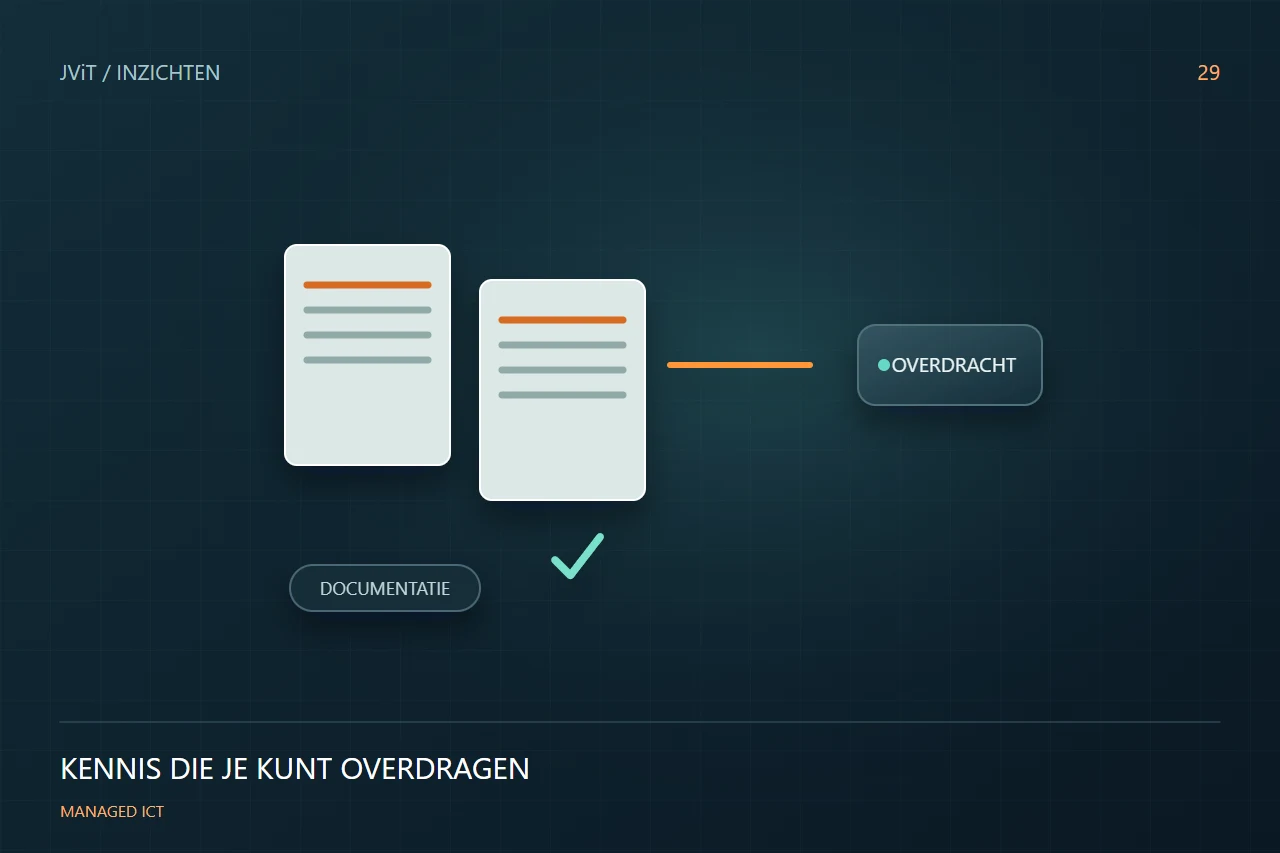
Good IT documentation helps someone else take over a job safely. Describe coherence, controllers and controlled steps and keep sensitive access data protected separately.
Document what is needed on failure
Start with the systems that support important business processes. Write down their owner, dependencies and contacts. Describe where work instructions can be found and what information is needed to investigate a malfunction. An inventory with only product names does not yet show what deserves first attention.
Write for the colleague who wasn't there
A reference to a traditional institution shall be of little value to a replacement. Describe the purpose of an action, the conditions and how you check that it has been successful. Also specify when to stop and consult. Keep passwords and other secrets from general documents and manage them through an appropriate secure facility.
Connect maintenance to changes
Documentation ages when a change is not processed. In the event of a delivery or adjustment, make clear who updates the corresponding information. Give documents an owner and a revision moment. Short, reliable instructions are more useful than a large archive that nobody knows about.
Somebody test the transfer.
Ask a colleague to perform a safe, defined task with the documentation. Write down where explanation is missing and work with it. JViT helps capture knowledge as part of management and transfer. Thus the operation remains less dependent on who happens to be available.
Discuss this with your team
- Have any critical dependencies been described?
- Can a replacement understand the instruction?
- Are secrets separately protected?
- Who updates documentation after changes?