The short answer
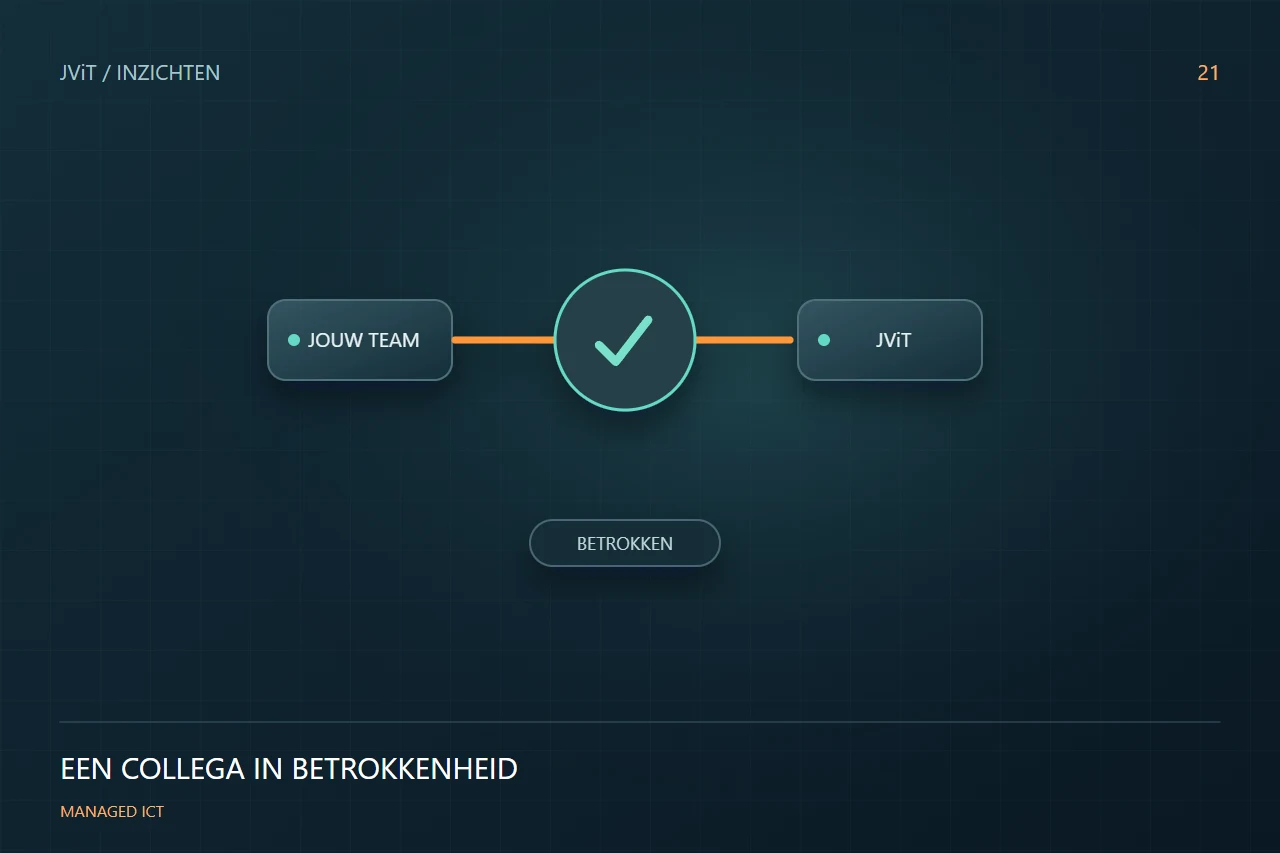
An involved IT partner knows the people, understands their work and takes responsibility for follow-up. This becomes visible through availability, clear agreements and improvements that remove recurring obstacles.
Look at the work behind the notification
An employee reports a slow laptop, but the real problem may be that offers do not leave on time. Anyone looking at the plane alone misses that corporate impact. Therefore, let your IT partner get acquainted with the departments, applications and peak moments. A conversation at the desk sometimes makes more clear than a long description in a ticket.
Make involvement concrete
Personal service should not depend on one person who remembers everything. Record who is the contact point, how agreements are recorded and who takes over in absence. Also agree when a notification is followed and how you will hear the next step. That makes cooperation predictable for both teams.
Use recurring questions as an improvement opportunity
If the same malfunction comes back every month, repairing is not enough. Collect patterns and discuss what structural adjustment is needed. Maybe a work instruction is missing, an integration is failing or an application asks for another device. The goal is that employees can do their work better.
Review collaboration on what people notice
Don't just ask how many notifications have been closed. Also discuss whether employees know where to go and whether agreements are being honoured. JViT wants to work closely with your people and understand the details. During regular consultations we link these experiences to a feasible next improvement.
Discuss this with your team
- Does our IT partner know the most important work processes?
- Is there any follow-up in absence?
- Are we discussing recurring interference?
- Do we ask employees what can be done better?