The short answer
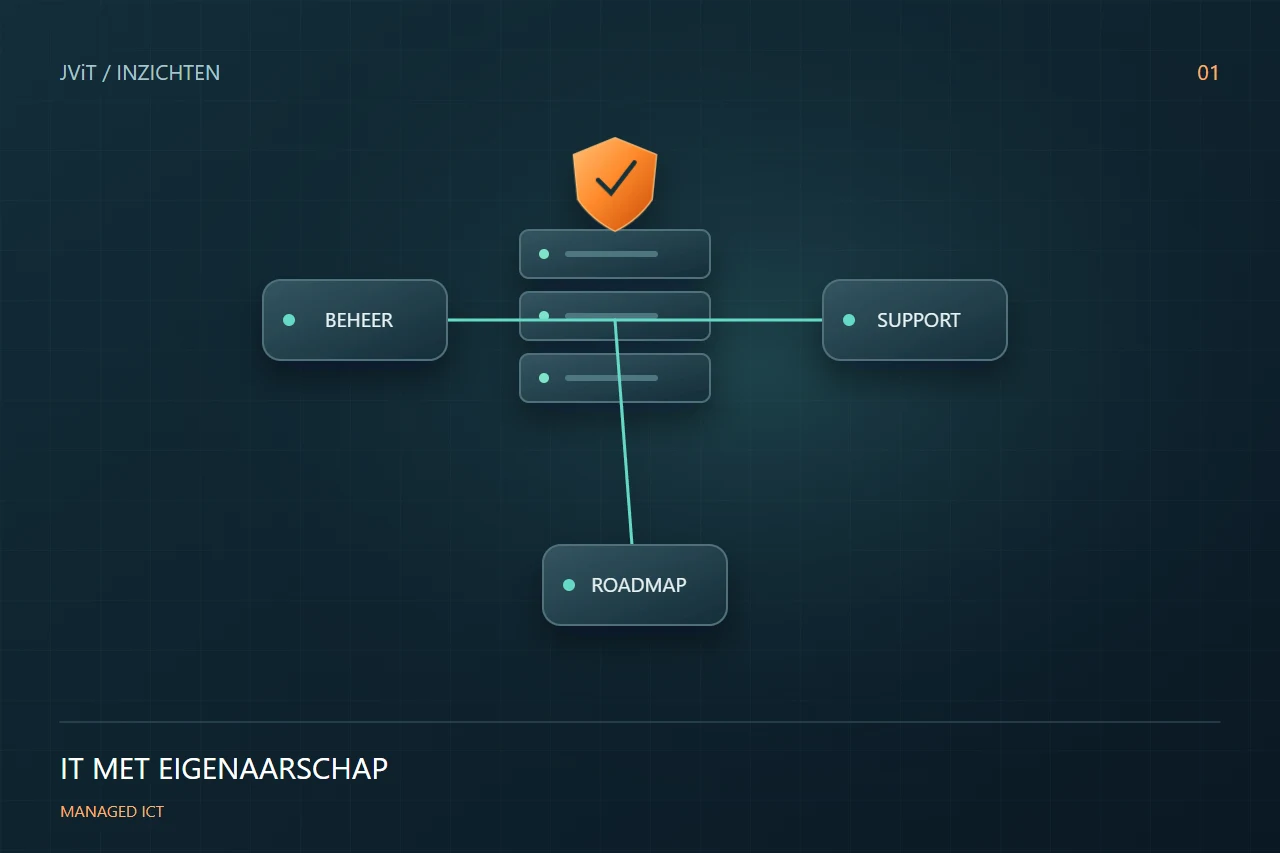
Managed IT means that a partner takes responsibility for agreed management tasks on an ongoing basis. The value is in clear ownership, preventive maintenance and insight into your environment. A helpdesk alone is not yet a complete management strategy.
Start with how your company works
A multi-branch production company has different priorities than an advisory office. First, identify which applications are essential, who works with them and what an interruption would mean. This is how you discuss management from the impact on the company, rather than from a list of devices.
Identify who is responsible
Ask which tasks are included: updates, monitoring, user management, backup control and vendor contact. Also make clear what is outside the agreement. Who decides on replacement? Who follows up a security alert? And who keeps the documentation up to date? Good division of labour prevents problems from remaining between two parties.
Look beyond the monthly fee
Compare bids on the same scope. Project work, licenses, support outside office hours and replacement can be charged separately. Ask how additional users or another site affect the cost. A clear proposal makes future decisions more predictable.
Make progress visible
Discuss recurring incidents, outdated equipment and outstanding improvements. A report is only useful if it leads to choices. At JViT we connect daily management to a roadmap: first gain control of the environment, then targeted improvement.
Discuss this with your team
- What systems are business critical?
- Who records incidents and improvement actions?
- What tasks and costs are excluded from the contract?
- How do we discuss risks and progress?