The short answer
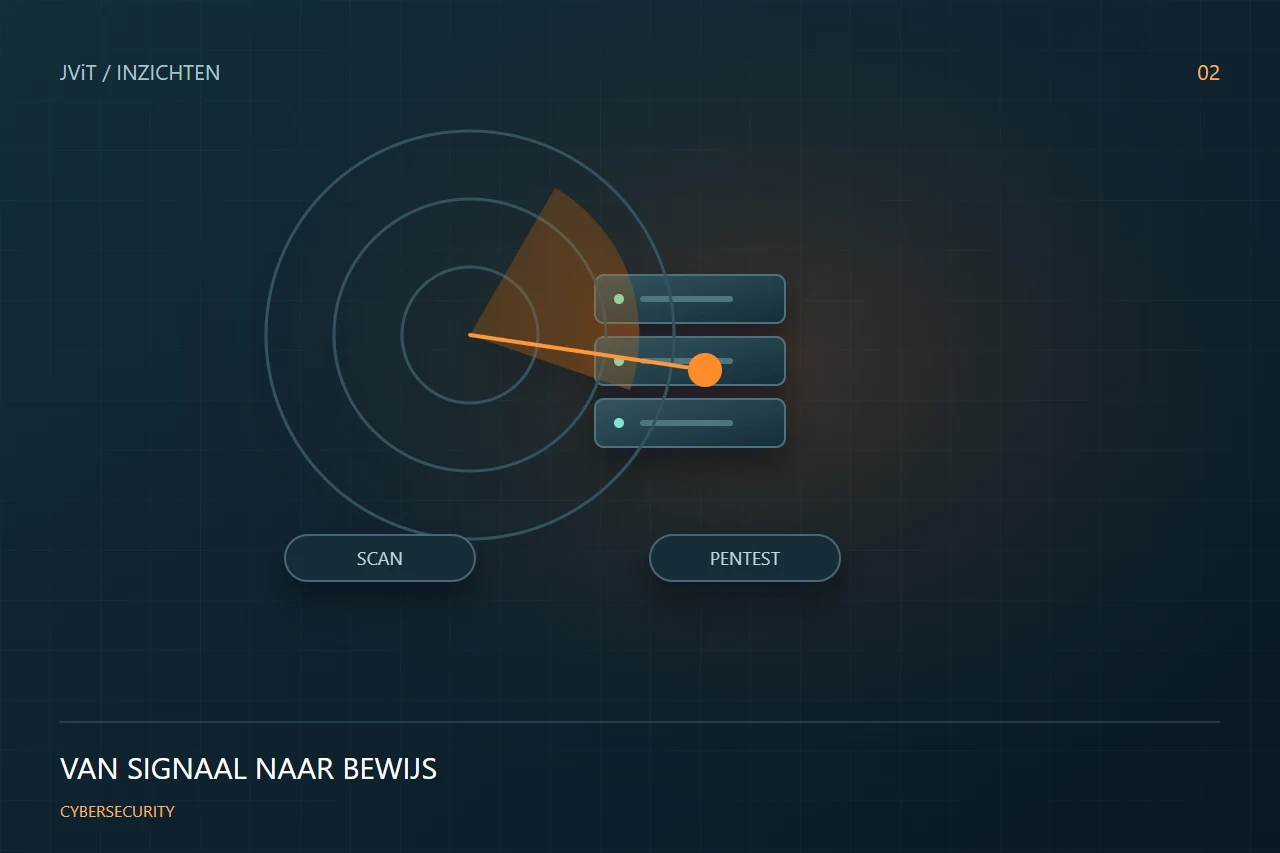
A scan indicates possible technical weaknesses. A penetration test examines how vulnerabilities can be exploited and what impact that has. The choice depends on the question you want to answer.
First formulate the research question
Do you want an overview of known vulnerabilities, or do you want to know how far an attacker can get in a particular application? These questions require a different approach. Determine which systems, accounts and business processes are relevant. For example, a test of one website says little about the security of your entire workplace.
Define the assignment clearly
Document prior authorisation, scope, timing, contacts and stopping conditions. Discuss which disruption is unacceptable and how urgent findings are reported. These agreements ensure that the test stays focused and that your team knows what it can expect.
Ask for understandable results
A technical score is not a remediation plan. You want to know what was found, how it was substantiated and what the possible consequences are. Ask for priorities and actionable improvements, distinguishing between rapid interventions and structural adjustments.
Plan the follow-up
Allow time for remediation and any retest. Discuss who makes the adjustments and how you confirm that the issue has been resolved. JViT connects ethical hacking to that follow-up, so findings also lead to a better defense.
Discuss this with your team
- What question should the test answer?
- Is the scope recorded in writing?
- Do we get remediation advice with priorities?
- Who performs the remediation and retest?