The short answer
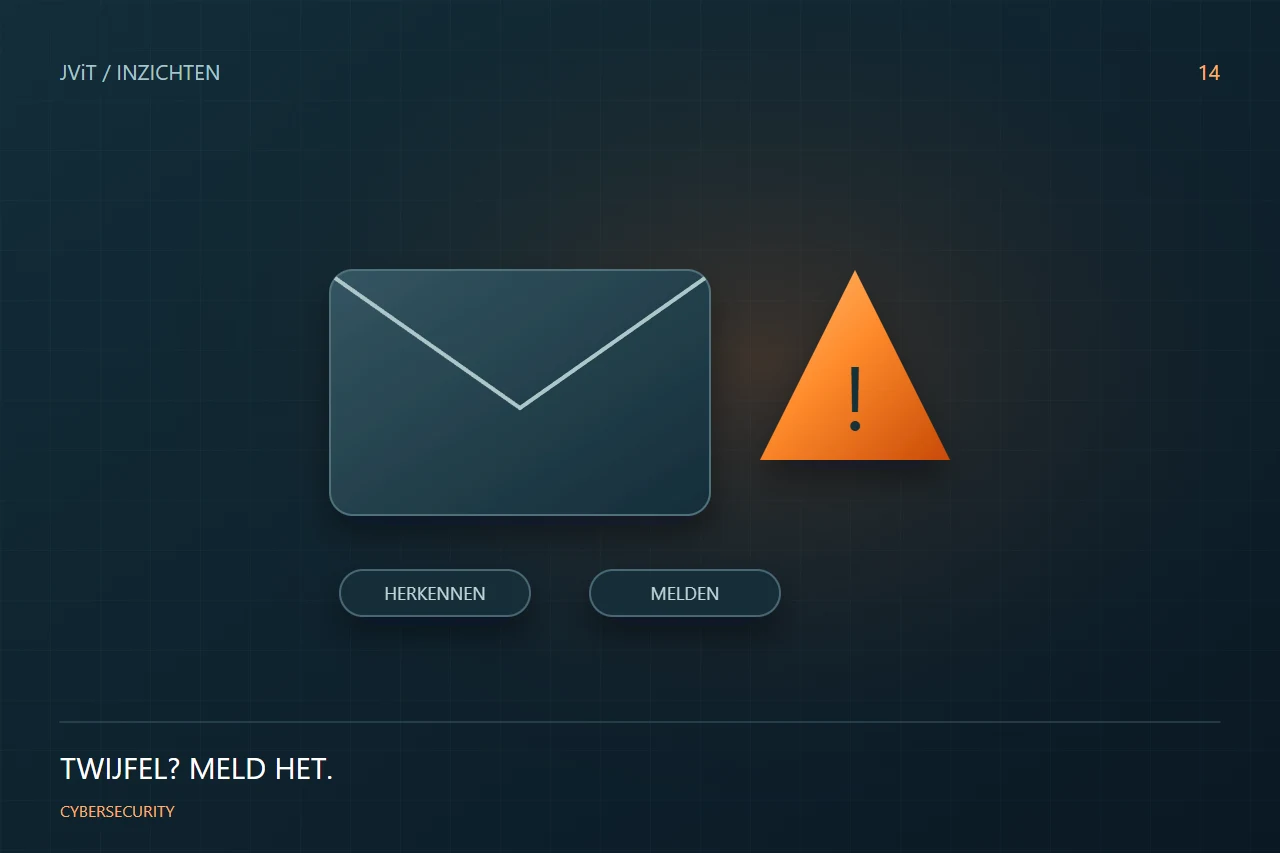
A useful phishing approach combines recognition, reporting and monitoring. Employees need to know where to report doubt, even if they have already clicked on a link.
Let examples match the work
A request from a supplier, a shared document or an urgent payment message often fits with normal working processes. Discuss how employees can check the sender and request via a known channel. Only paying attention to linguistic errors is too limited.
Make reporting easy
Choose a clear reporting route and explain what information is useful. Avoid employees sending suspicious messages unnecessarily to multiple colleagues. The recipient of the notification must know how it is assessed and when additional action is needed.
Make reporting feel safe
If you're afraid of blame, you can hide a mistake. Emphasise that a quick alert helps the team act. Also discuss what to do after a suspicious login or sharing information. The concrete follow-up steps will be determined by the responsible IT or security team.
Make training a recurring conversation
A one-time presentation quickly disappears to the background. Use short repetitions and examples from relevant processes, without embarrassing employees publicly. JViT helps tailor training to work and connects awareness with technical security and support.
Discuss this with your team
- Does everyone know the reporting route?
- Who evaluates incoming reports?
- Do we discuss what to do after a mistake?
- Do examples connect to real work processes?