The short answer
Assess an AI receptionist throughout the conversation and on the final outcome. Use scenarios for misunderstandings, transfer and missing information, and check what really gets into your systems.
Test identifiable telephone situations
Together with sales and support, create a list of common questions. Add conversations with background sound, an unclear name or multiple questions at once. Allow several fellow dynamometers to perform the test. The goal is to discover where additional explanation or another conversation route is needed before customers work with it.
Check the agreements after the call
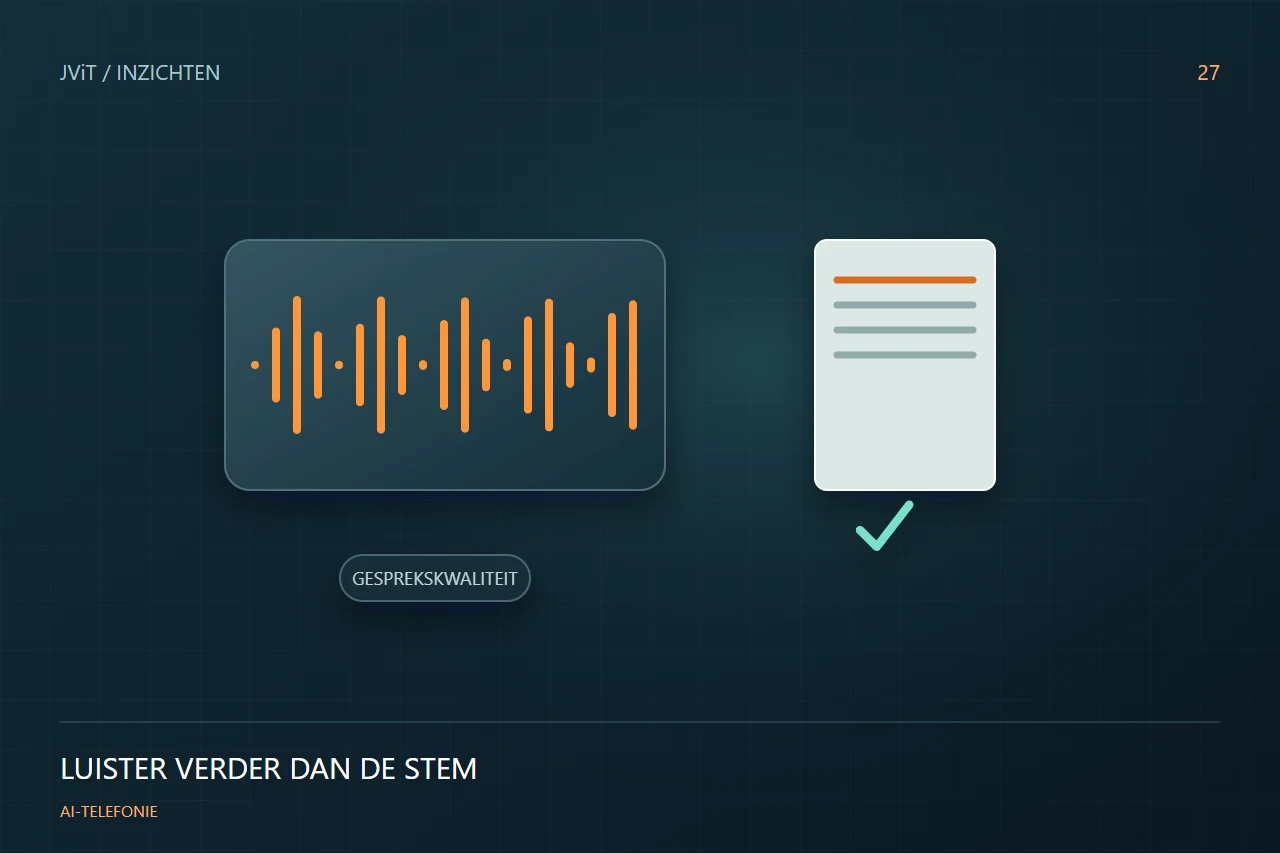
A correct summary is not the same as a properly created file. Compare the call with the stored data and the follow-up. Is the right team assigned? Is there a callback? Is there something the organization can't deliver? Make this check part of every major change.
Determine when a person takes over
A caller should be able to reach a suitable colleague in case of doubt or a difficult situation. Agree when the assistant must stop asking questions and what context goes along. Clearly state that it is an AI assistant. Test also what happens when no one is available without promising a direct transfer that cannot take place.
Improve on the basis of targeted evaluation
Discuss recurring misunderstandings and adjust one part at a time. Then repeat the relevant tests, so that an improvement does not introduce an error elsewhere. JViT can connect Vapi integration with your work processes and help set up the test approach. Use only data and conversations for which you have the correct consent and agreements.
Discuss this with your team
- Are difficult conversations taken?
- Are the saved follow-ups correct?
- When does a colleague take over?
- Are changes being retested?