The short answer
An AI call center only works well when the call connects to a business process. Determine what the assistant may ask, record and handle, and when an employee takes over the call.
Start with a clear call scenario
Handling an incoming request, following an existing lead and prospecting are different tasks. For a first implementation, choose one scenario with a clear outcome. Think of collecting a question and contact preference, so that the right colleague can call you back with the right context.
Integration makes the conversation useful
Vapi supports telephone calls with AI assistants. For your company the impact is in the connection with processes: What information goes to a CRM, who receives a task and how do you prevent double follow-up? Available links, privileges and error handling should be tested together.
Prospecting requires clear agreements with your sales team
Decide which contacts are suitable, when calls are made and which contacts are excluded. The assistant identifies itself as AI and must process a request to stop further contact correctly. Make agreements on the transfer of interest, callback requests and questions that fall outside the scope of the assignment.
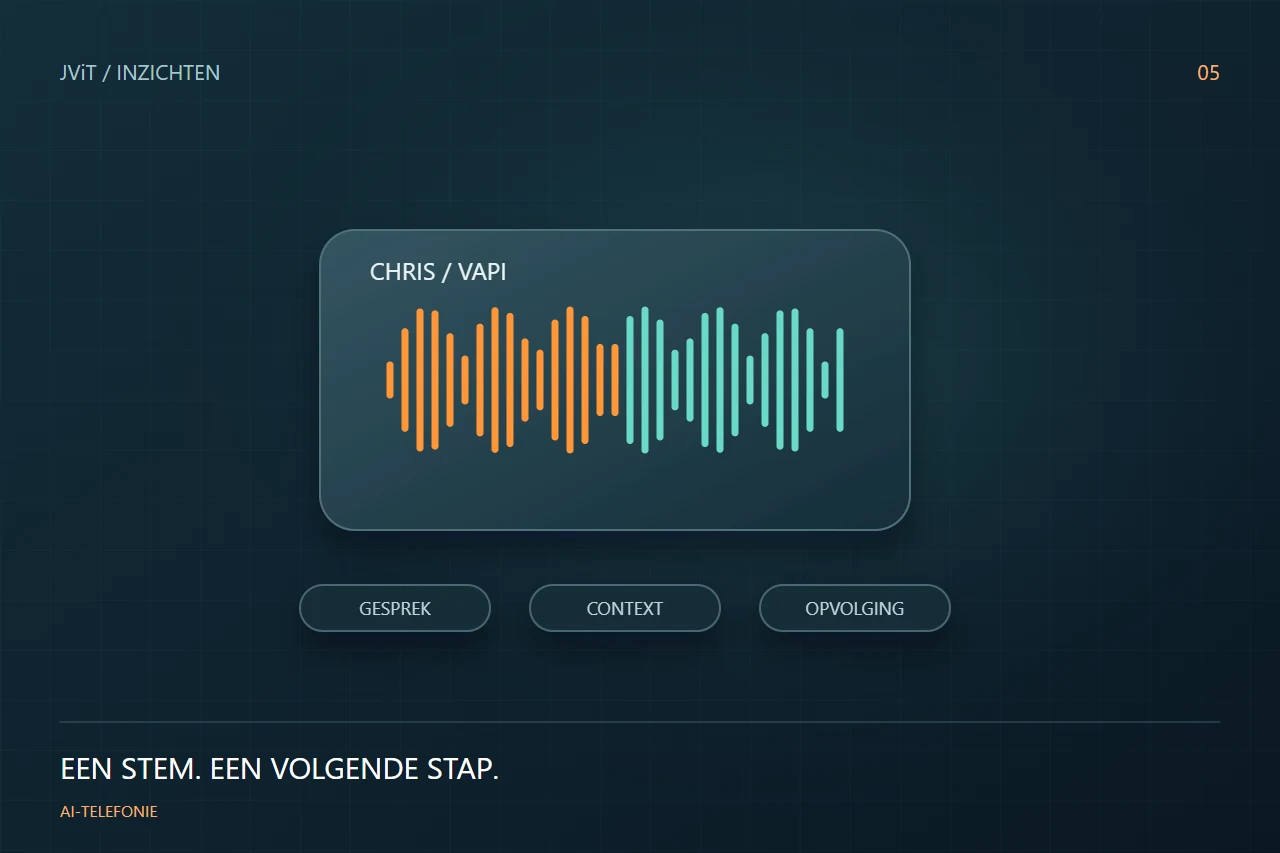
Chris is our own application
JViT realized for itself a Vapi integration with Chris. We use this experience to develop concrete scenarios with customers. Request a test call and assess the brightness, tempo and transfer. Look beyond the voice: the processing after the call determines the practical value.
Discuss this with your team
- What is the purpose of this call scenario?
- When does an employee take over?
- Where is information processed?
- How do we measure conversation quality and usable follow-up?