The short answer
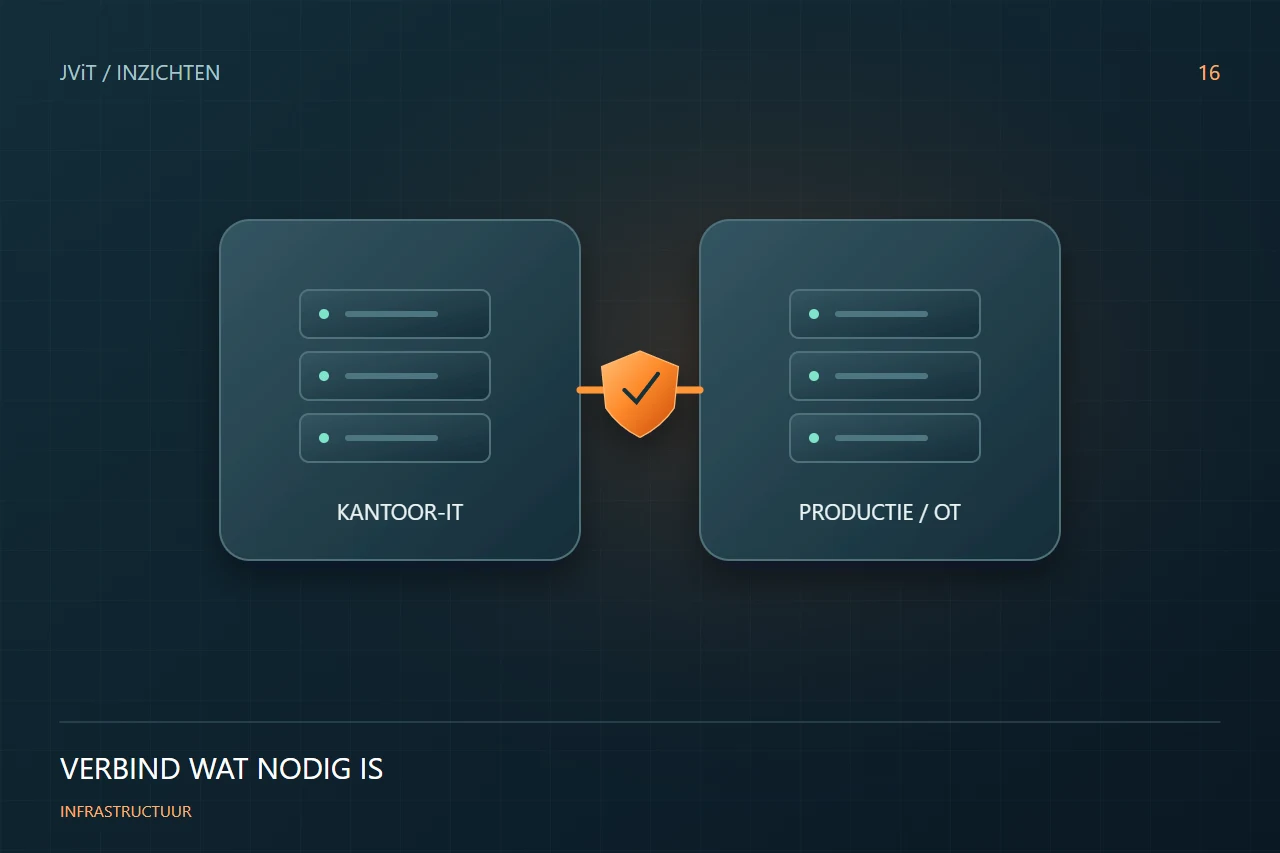
Segmentation divides a network into demarcated parts with controlled connections. Start knowing which systems should communicate with each other and why, before setting boundaries.
Map necessary communication
A production system can exchange data with planning, monitoring or a supplier. Capture those dependencies with the people who know the process. Blocking a connection without that context can disrupt its operation.
Make zones with a clear purpose
Think of office appliances, guests, management systems and production environments. The right layout depends on the environment. A separate network label alone is not enough: the rules between zones and the way in which they are managed must also fit the purpose.
Limit external and management access
Decide who needs access, from where and for what activities. Avoid temporary support becoming unnoticed permanent access. Identify how access is requested, approved and withdrawn, and how work is coordinated.
Run changes checked
Test the impact of adjustments with the relevant suppliers and process owners. Plan a relapse option and document the final operation. JViT looks at IT and OT in coherence and helps connect network choices to availability, management and security.
Discuss this with your team
- Which connections are necessary?
- Who knows the dependencies of production?
- How is external access managed?
- How do we test changes without unnecessary disruption?