The short answer
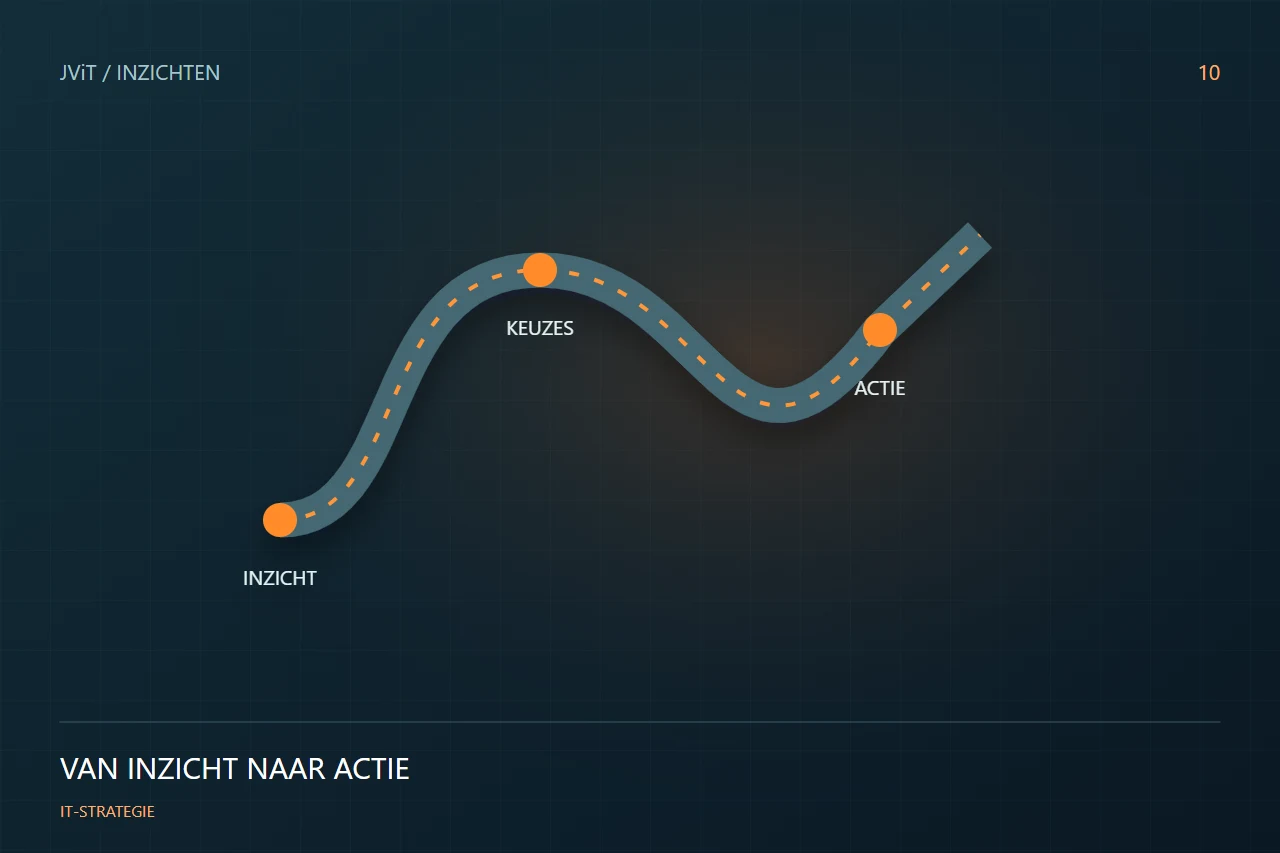
A useful IT roadmap links findings to business impact, priorities, owners and a feasible order. Thus a scan becomes the beginning of improvement instead of a separate report.
Give each finding a business meaning
An outdated system is an observation. Then describe what it supports and what the consequences of failure or abuse may be. This helps management compare different improvements without having to know all the technical details.
Make dependencies visible
Some measures can be implemented quickly, others require preparation. For example, a new application can only start properly if identity, access and data are in order. By naming dependencies you prevent a project from having to be redesigned later.
Make the first step small enough
Choose a first set of actions that the organisation can carry. Give each action an owner and a clear result. Do not limit improvements to purchases: a recovery test, better documentation or an agreement on user management may also be a significant improvement.
Discuss the roadmap regularly
Business plans and circumstances change. Use the roadmap as a working document and review priorities when a site is added, an application changes or a new risk becomes visible. The JViT Executive IT Scan is a starting point for that call; The follow-up assignment will be tailored to your situation.
Discuss this with your team
- What business impact is part of the finding?
- What dependencies determine the order?
- Who's taking the action?
- When do we assess the result?