The short answer
A useful IT consultation ends with choices, owners and follow-up moments. Start with the business goals and discuss only technical details needed to understand the impact of a decision.
Start with what changes in the company
Growth, new employees, a branch or other services can have an impact on IT. Ask management what changes are coming and what uncertainties there are. This way, the team can prepare for time pressure. Also, have departments indicate which recurring nuisance slows down their work.
Translate signals into meaning
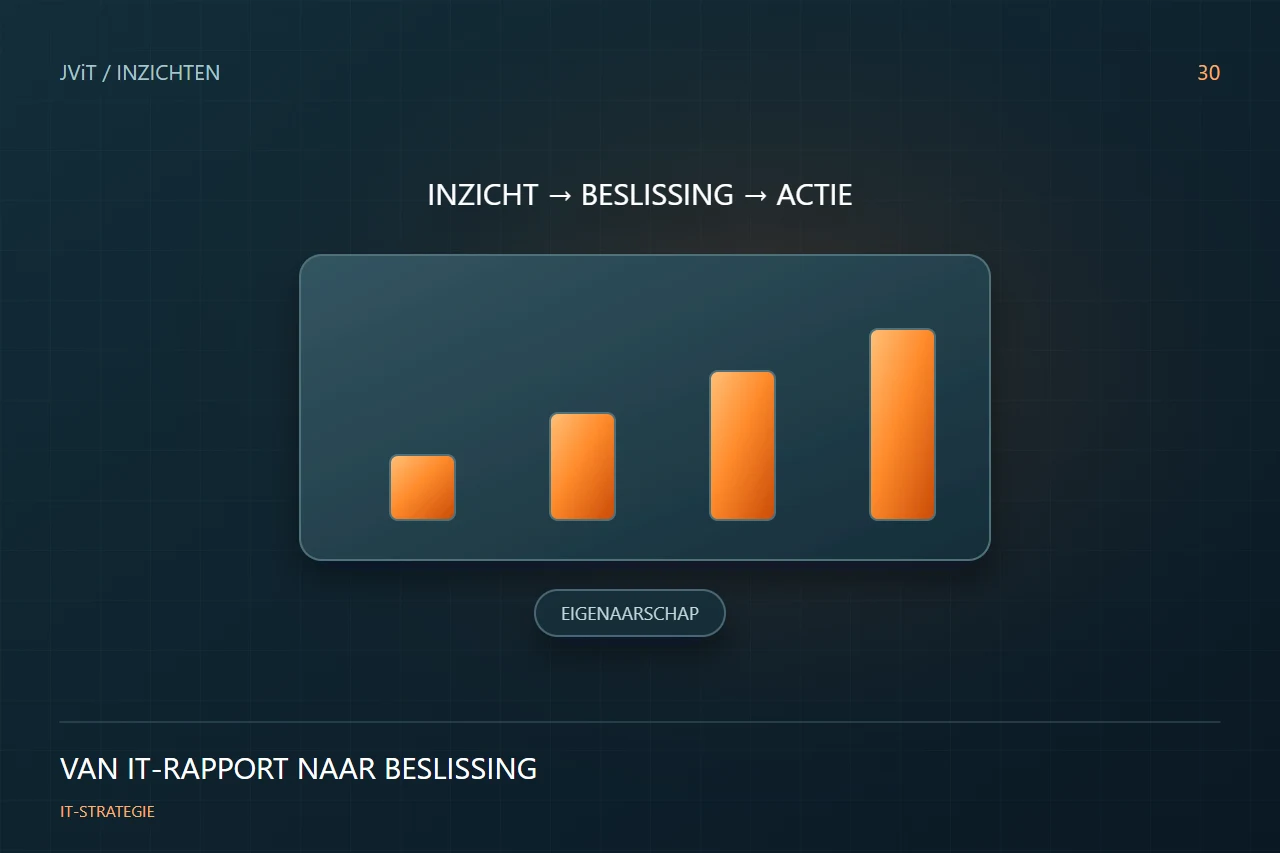
A report with numbers of notifications or warnings does not automatically tell what is important. Describe which processes are affected, which is already solved and which choices are still open. In case of uncertainty, indicate which information is missing. Avoid false security and clarify the difference between an observation and a identified problem.
Make decisions and assign ownership
Specify the purpose, the effort and the dependencies of each proposal. Also discuss what delay means. Investment, process adjustment or training may serve the same business objective; the choice requires a balance of action, safety and available resources. Thus IT consultation remains relevant for the whole organisation.
Close with demonstrable follow-up
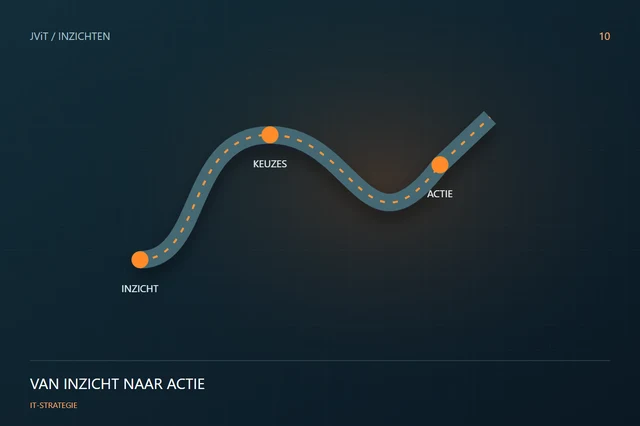
Capture who picks up an action and when it comes back. Start the next consultation with the previous agreements, so that subjects are not repeatedly reopened. JViT supports this conversation through CIO as a Service: involved in your organization and focused on an executable roadmap.
Discuss this with your team
- What business changes are coming?
- What signals do a decision require?
- Are impact and dependencies clear?
- Does every action have an owner and follow-up?