The short answer
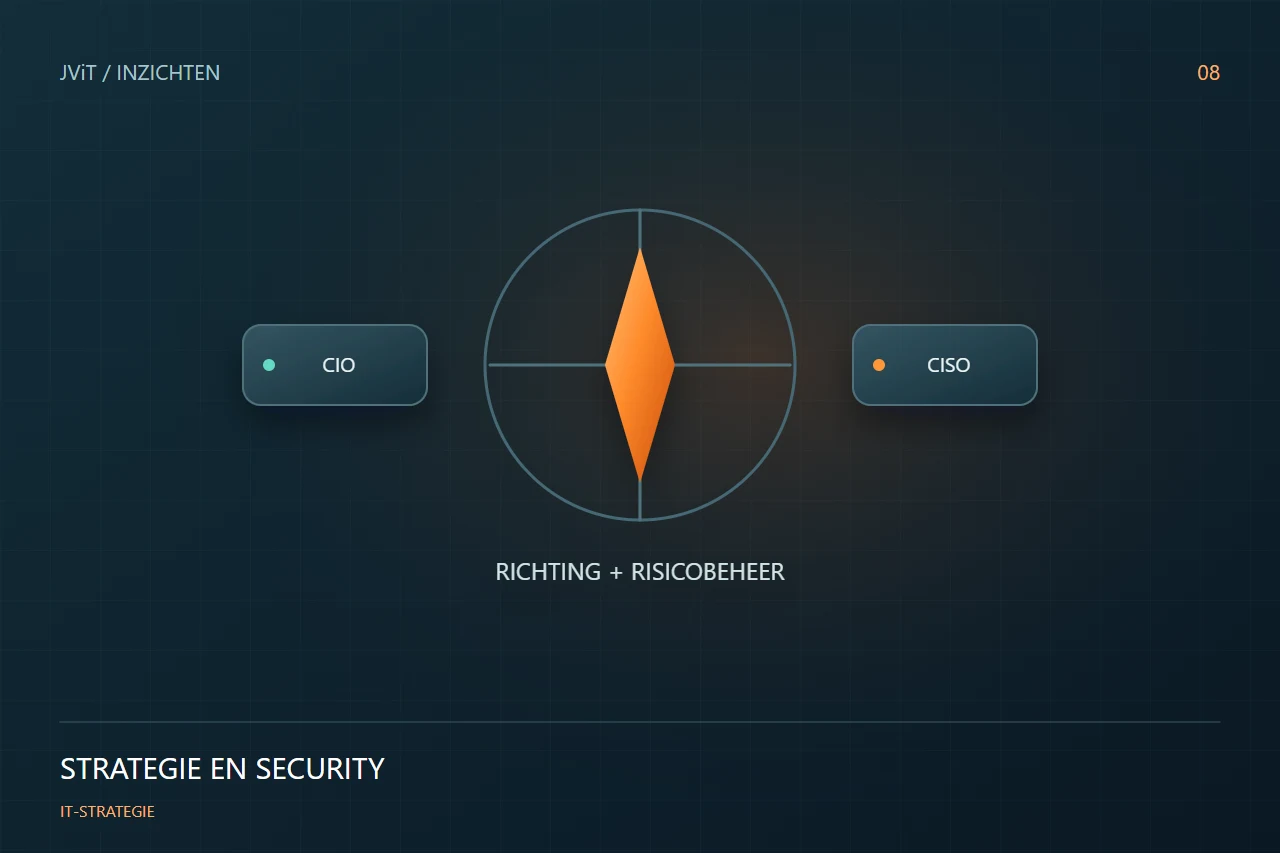
A CIO connects IT choices to business goals. A CISO helps control information security and risks. Both roles can be fulfilled externally and work with your own team.
When a CIO role helps
Your company grows, suppliers make different proposals and projects compete for budget. Then there's a need for someone to maintain alignment. The CIO role helps weigh investments, make dependencies visible and discuss a roadmap with management.
When a CISO role helps
You want to know which security risks have the highest priority, who will follow them up and which agreements are missing. The CISO role connects policy and technology. Think of responsibilities for access, incidents, suppliers and periodic reporting. The precise implementation follows the organisation and the agreed assignment.
Advice should follow implementation
A roadmap or policy document will only deliver value when someone takes ownership of the actions. Record what the internal team does, what the external partner does and what decisions remain with management. Discuss progress in understandable terms: risk, impact, investment and result.
Start with the remaining decisions
Gather the questions the management keeps coming back to. Is it primarily about priorities and investments, or about risks and security responsibility? That makes it clear which support is needed first. JViT offers both roles and aligns them with operational management and security.
Discuss this with your team
- What decisions remain?
- Who's guarding the entire IT roadmap?
- Who reports on security risks?
- Who gets responsibility for execution?