The short answer
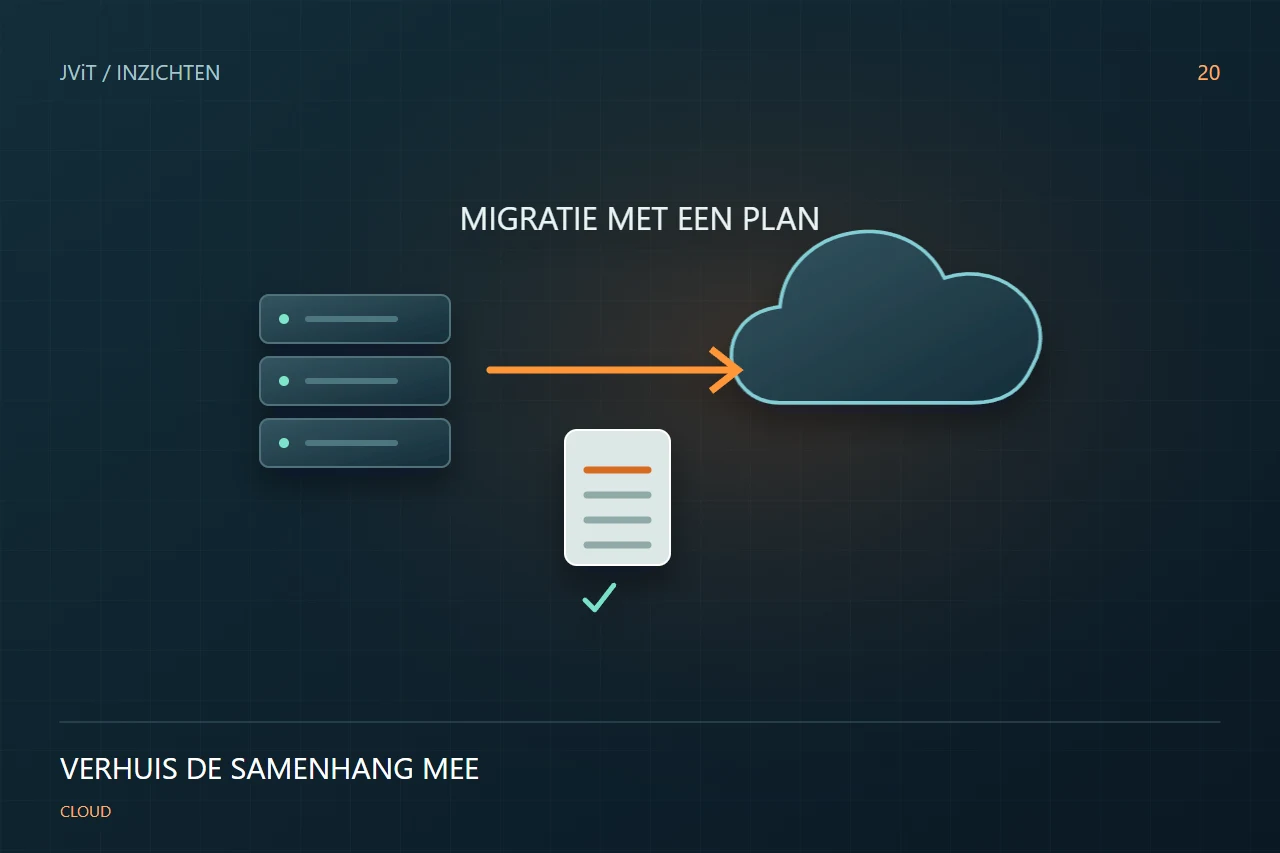
A cloud migration is more than copying an application. Map dependencies and determine in advance how to test, switch and fall back if necessary.
Draw the application in its environment
Note users, accounts, data sources and linked systems. Also think of planned tasks, reports and services and integrations that exchange information. A forgotten link can only become visible after the move, when the business process is already dependent on the new environment.
Define what a successful migration is
Record concrete test cases: login, perform a task, process and report data. Let users assess whether the outcome is correct. Technical availability alone does not prove that the application is working properly.
Create an executable switching plan
Determine the moment of data transfer, any interruption and communication to employees. Capture who decides to continue or fall back. Check that a relapse remains technically possible when data has already changed in the new environment.
Rule management and costs after removal
Ownership, monitoring, backup and access management remain necessary. Make the new cost structure visible and plan aftercare for questions from practice. JViT guides cloud migrations as part of a wider IT roadmap tailored to the functioning of your business.
Discuss this with your team
- Are all the links known?
- What test cases prove it works?
- Who decides about conversion and relapse?
- Who manages the new environment?