The short answer
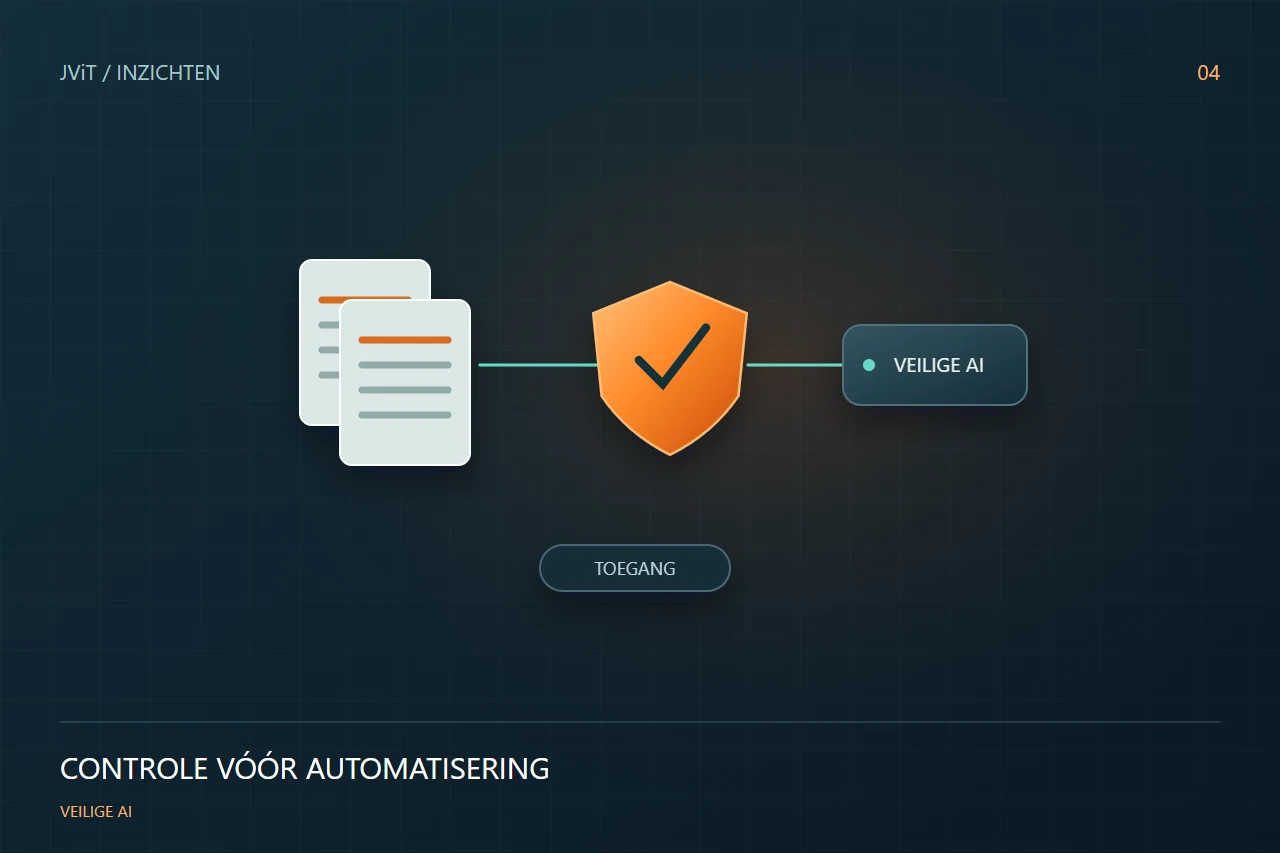
Secure AI implementation starts with a defined business process, appropriate data and clear permissions. Then choose the application and test what it really does in your environment.
Choose one process with a recognizable result
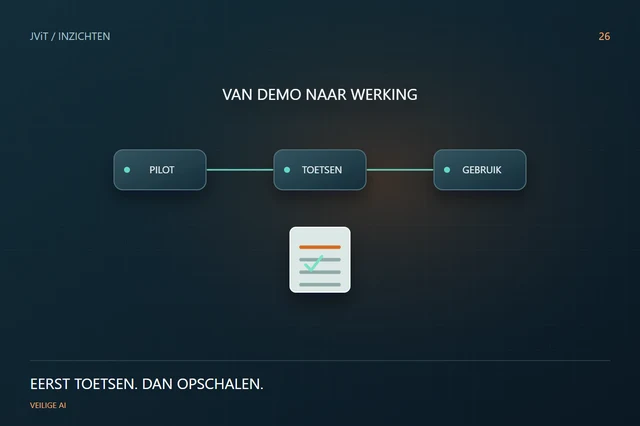
For example, start preparing internal answers or summing up submitted documents. Capture how much work the process requires and what a good result is. This gives you a comparison point during the test and prevents an impressive demo from becoming the only assessment criterion.
Check which information is available
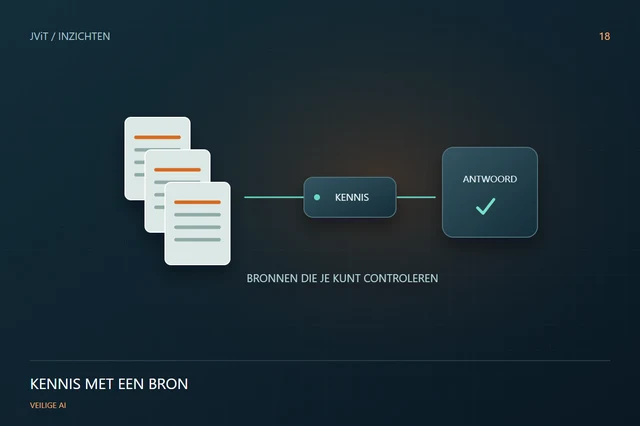
An assistant may only use information that fits the task and user. Check shared folders, document permissions and links. Microsoft describes how Microsoft 365 Copilot connects to existing access rights. This makes it extra important to clean up overly broad access beforehand.
Limit actions and check answers
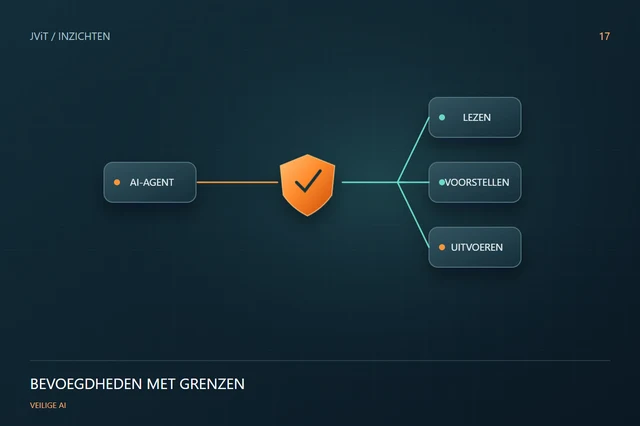
Suggesting an answer is something other than independently e-mailing a customer or changing a record. Determine which actions require human approval. Let users know what information to check and how to report errors.
Make management part of the rollout
Select an owner for instructions, access and evaluation. Discuss how you will guide new employees and test changes. As Anthropic partner, JViT helps secure AI implementations with Claude and agents, in addition to applications in the Microsoft ecosystem. The configuration depends on the selected products and your business context.
Discuss this with your team
- What process do we want to improve?
- What data are really needed?
- What actions require approval?
- Who manages the application after the pilot?