The short answer
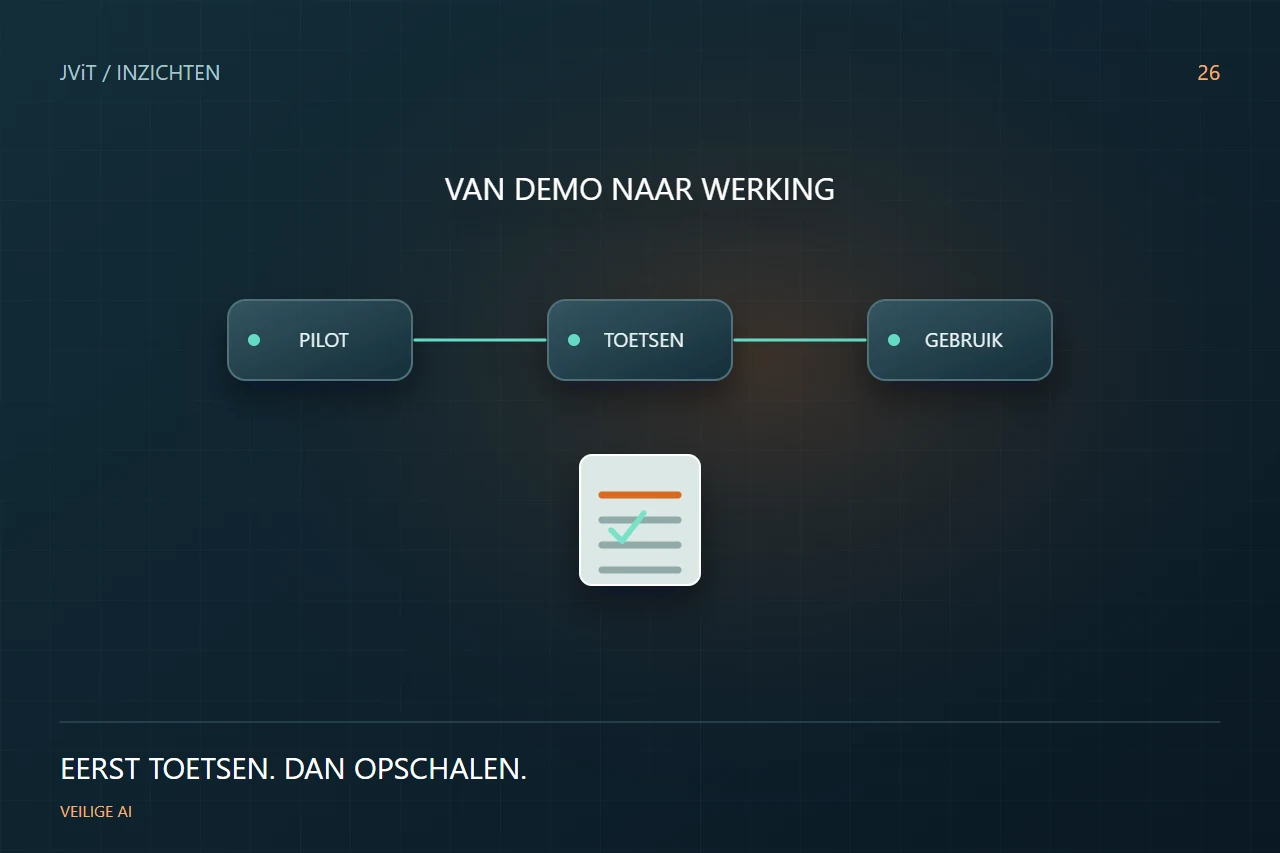
An AI pilot is ready for a next step when you've tested quality against real tasks and have also managed errors, management and human intervention. Start with clear criteria, not a broad roll-out.
Pre-determine what is useful
Choose a defined task and collect examples of normal and difficult situations. Let the people who know the work indicate when an answer or action is good enough. Think of completeness, resource usage and necessary corrections. Without such criteria, success is quickly measured by one successful demonstration.
Make the solution as simple as the task allows
Not every application requires an independent agent. Sometimes a fixed set of steps is sufficient with human assessment. Anthropic also makes this distinction in his explanation of workflows and agents. Choose the approach that suits the task and add more independence only when you can demonstrate a clear advantage.
Test what is outside the demo
What happens to missing information, an unreachable link or a double request? Can someone stop the execution and understand what has already happened? In addition, check consumption during normal use. A solution that only works with ideal import requires further preparation.
Assign ownership after delivery
Capture who maintains, assesses changes and follows notifications. Start the roll-out with a limited group and arrange an evaluation. JViT helps implement safe AI as part of your business process, with technical boundaries and a clear role for employees.
Discuss this with your team
- What examples determine our acceptance?
- Is a cop really necessary?
- Have any errors and stopping capabilities been tested?
- Who manages the solution after the pilot?