The short answer
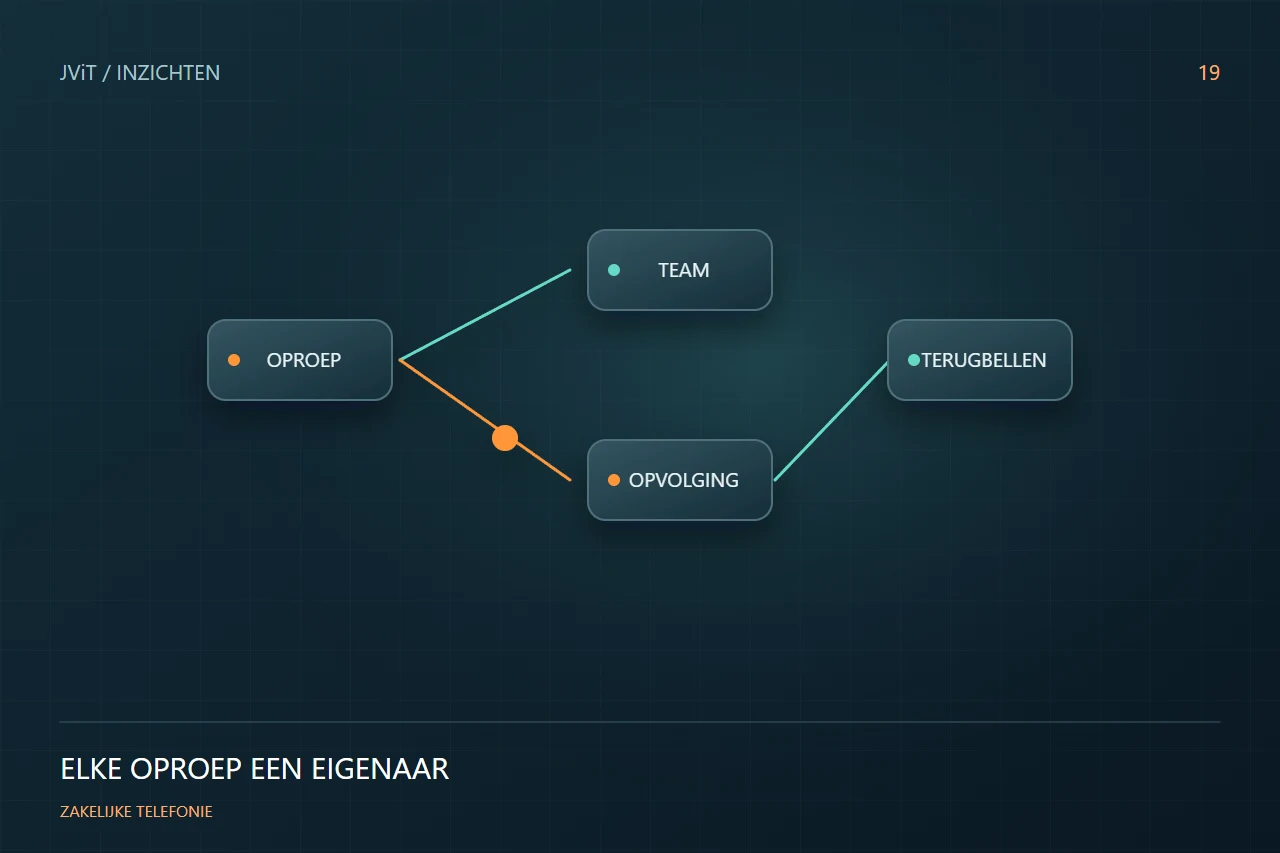
A missed call will only be properly followed if someone owns the next step. Combine clear call routes with callback agreements and insight into outstanding questions.
Research when calls are lost
Discuss peak moments, absence and transfers between departments. Look not only at numbers, but also at the kind of questions and available occupation. Sometimes the solution lies in a different division of labour rather than in additional technology.
Capture what the caller can expect
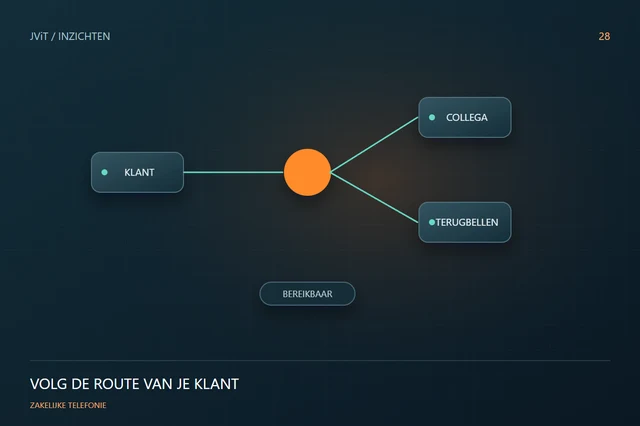
Make opening hours and alternatives clear. See who calls back, what information is needed and how colleagues can see that a request is already being handled. This prevents double follow-up and contradictory answers.
Use technique to support the agreements
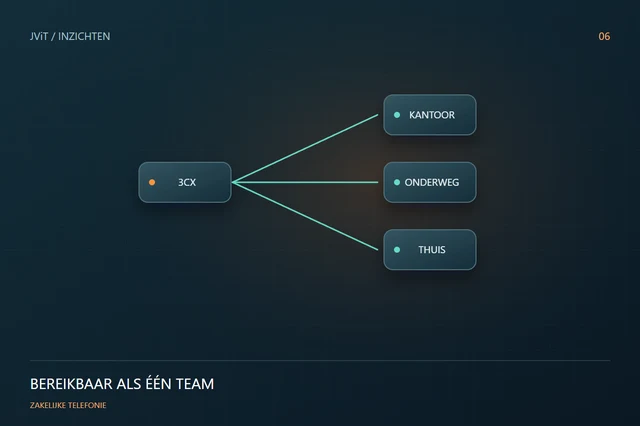
An appropriate telephone exchange can support the chosen call routes. AI telephony can collect additional information or help clarify a demand, provided the scope and transfer are clear. JViT looks at 3CX and Vapi from that business process, without taking a link for granted.
Measure whether the follow-up is improving
For example, look at open callback requests and the time to follow up. Meet with the team to see what a useful improvement is. A short conversation is not automatically a good conversation; the customer must be able to move forward with the right next step.
Discuss this with your team
- Who follows missed calls?
- What does the caller expect after the call?
- How do we prevent double follow-up?
- What measurement says anything about customer experience?