The short answer
Combine appropriate login security with explanation, a trial group and safe recovery arrangements. Pay extra attention to administrators, external access and situations where someone cannot use his second factor.
List where people register
Start with business email, critical applications, remote access and management accounts. Some services have their own login process. Make visible which systems are already covered and where exceptions still exist. CISA recommends MFA in particular for external and administrative access; determine the appropriate method per environment.
Explain what employees will notice
Tell us in advance what changes, when that happens and where help is available. Use identifiable examples and give space to go through the registration. Bring shared workplaces and employees without a business mobile device. A technically correct policy is only workable when normal work situations are considered.
Treat recovery as part of security
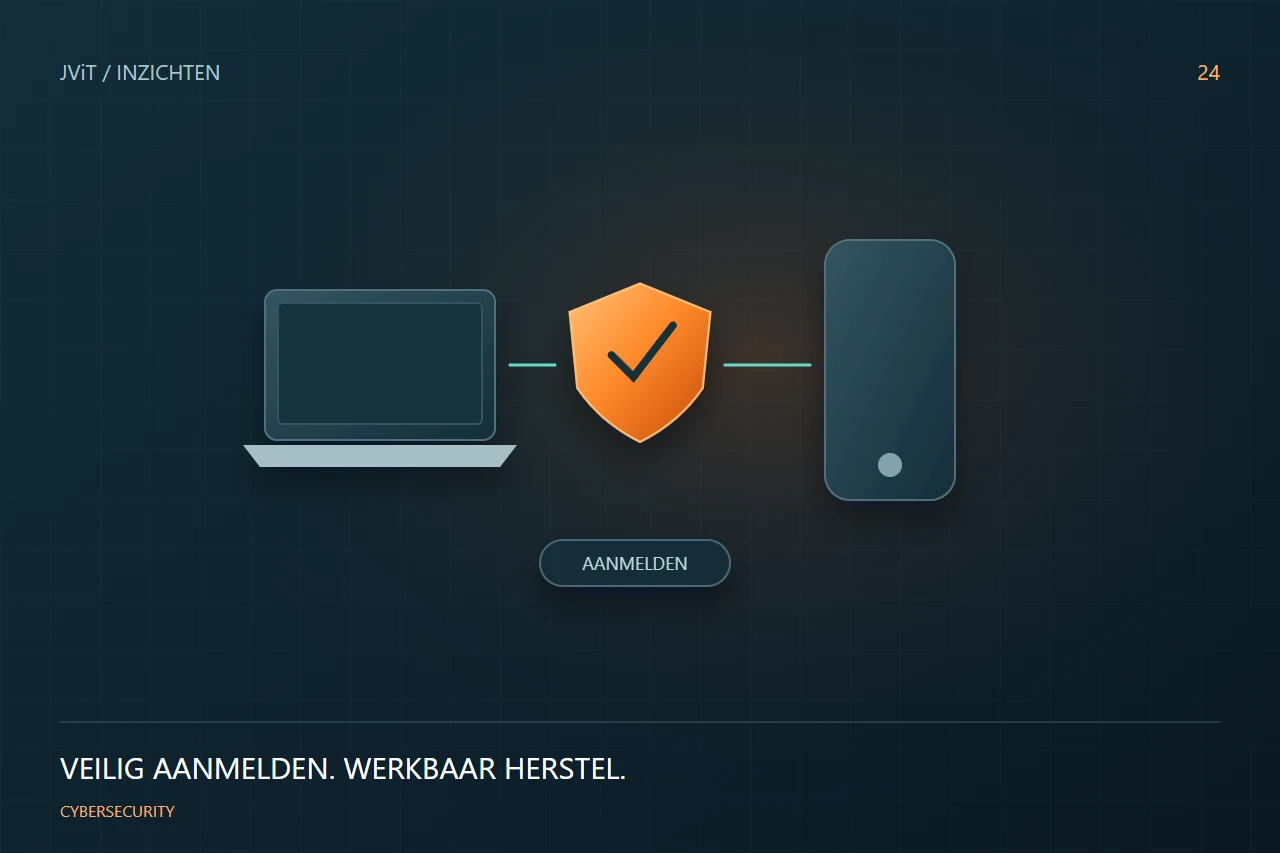
A lost phone must not lead to an uncontrolled detour. Decide how identity is checked in case of recovery and who can approve exceptions. Test that procedure with support. Also explain that unexpected login requests should be reported instead of customary approval.
Roll out and check coverage
Start with a representative group and solve bottlenecks before scaling up. Then check which accounts are still outside the policy. JViT helps connect the security device to a practical roll-out, making additional protection part of the daily operation.
Discuss this with your team
- Are external and management accounts included?
- Has registration been explained?
- How do we restore access safely?
- Who follows exceptions?